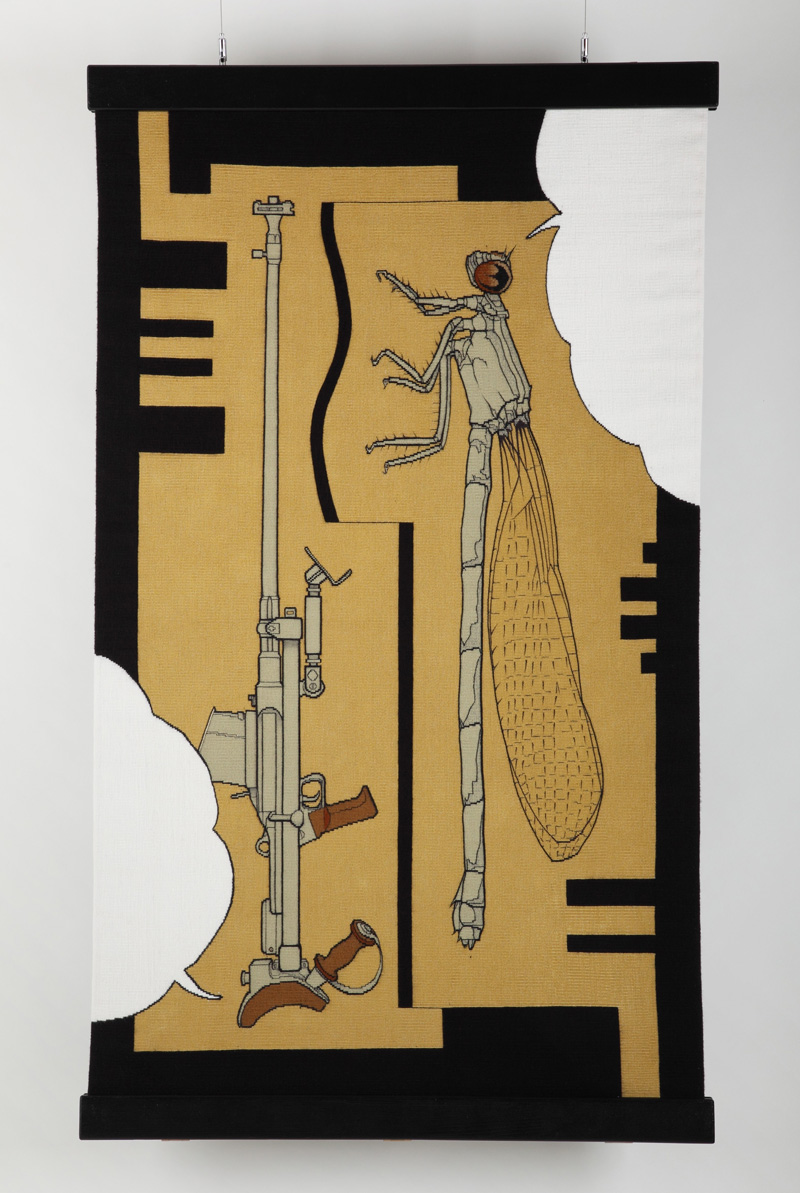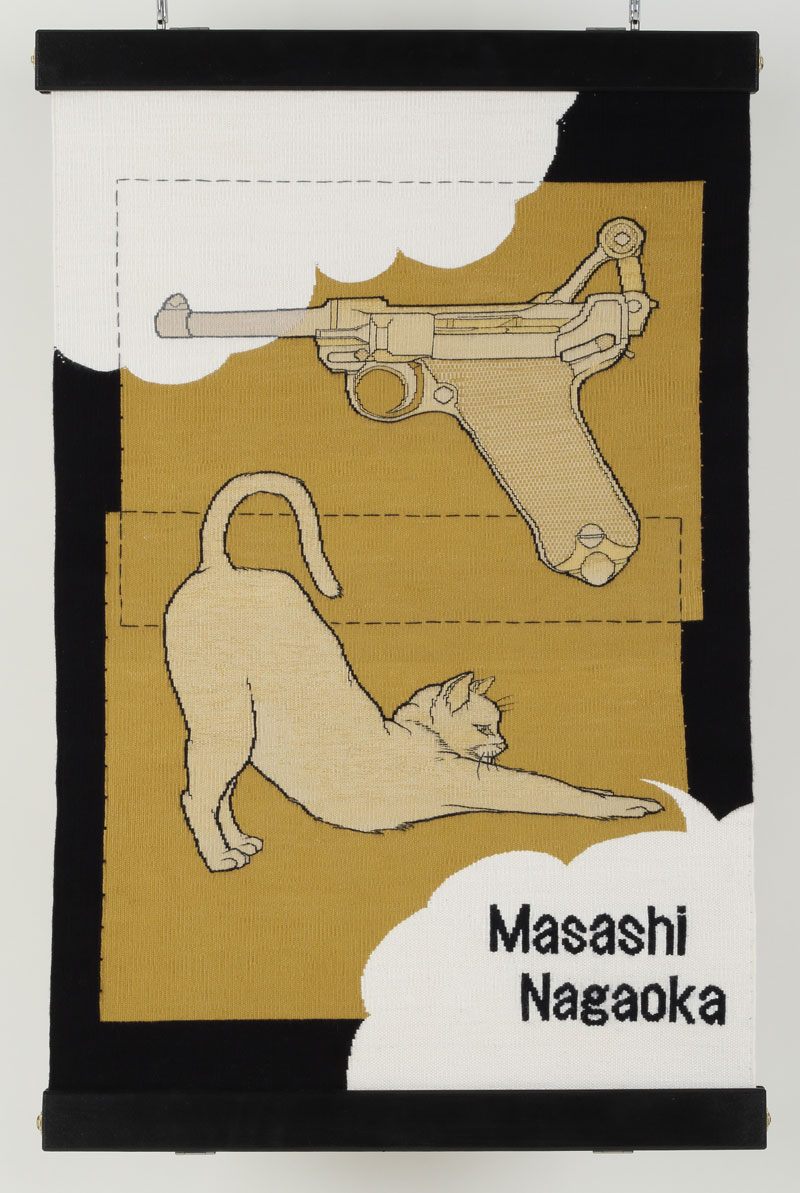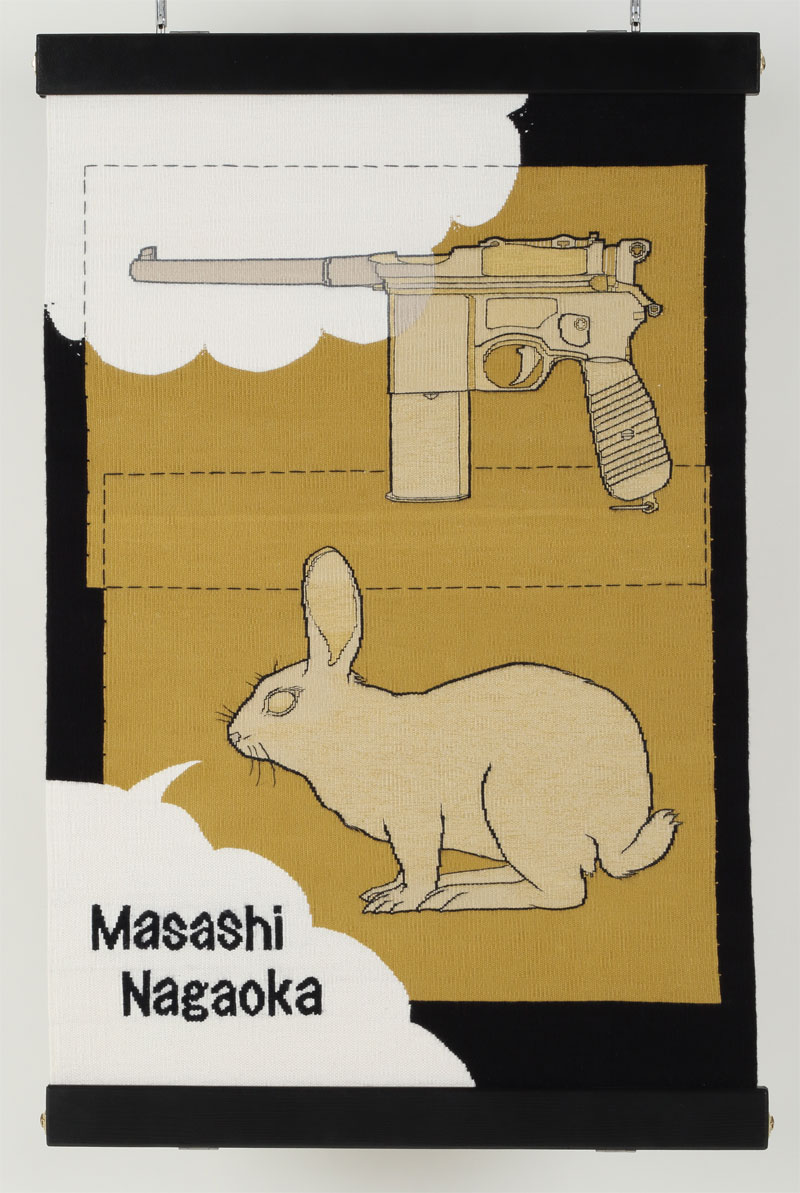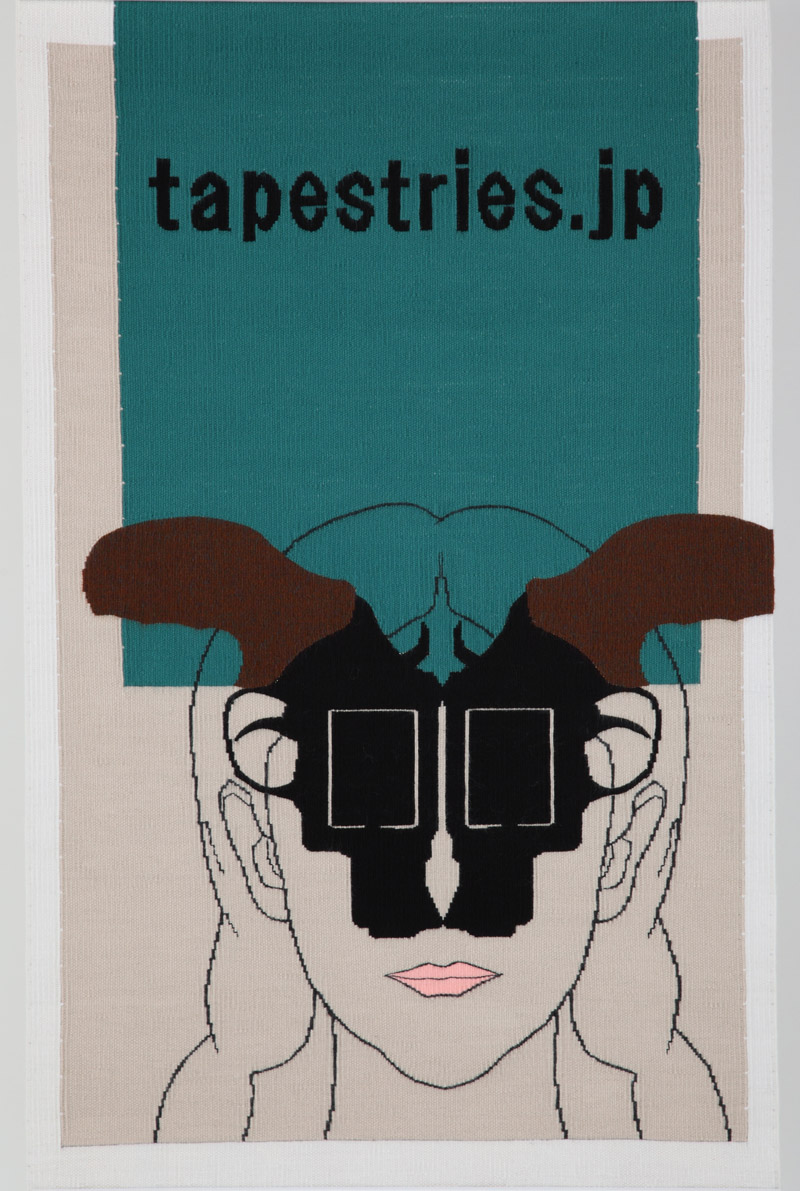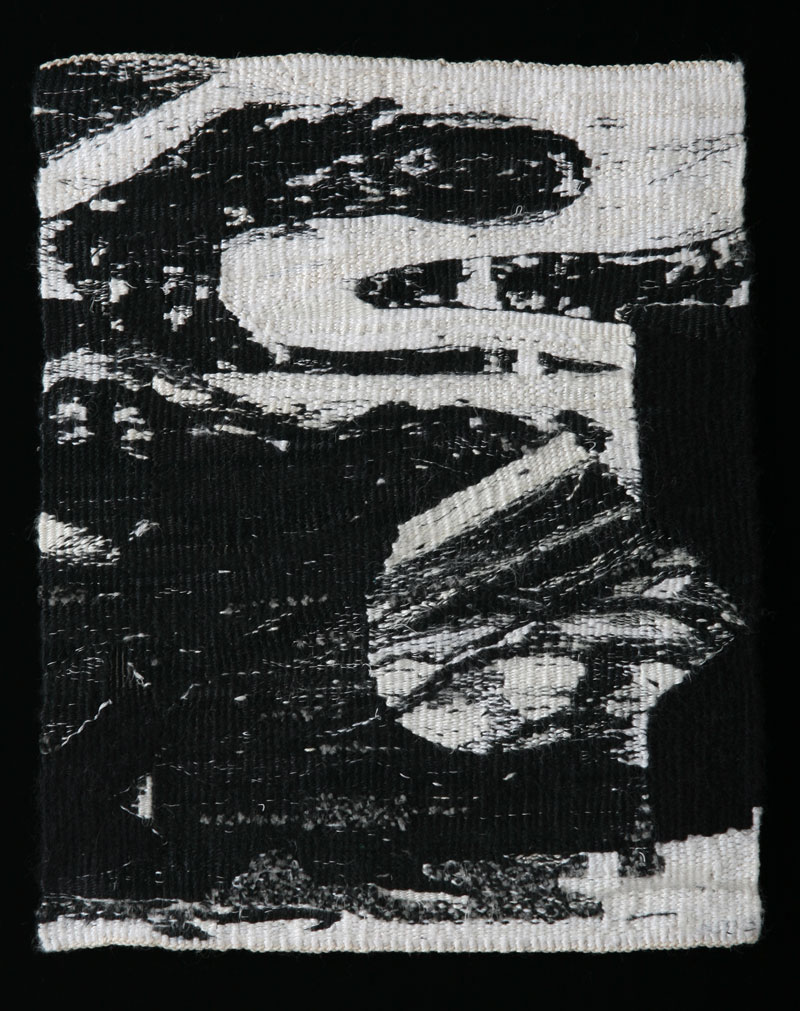



Every practical training room in the art department was full of students when I entered the university. I thought I could not create anything in the crowds and noises, though it was a just typical scene of many Japanese universities in 1993. However there was only one room where had tranquil silence left. That was the weaving room. I had an intuition that I needed this quiet room and a loom immediately. That was the reason why I chose tapestry weaving as my specialty in my university days and it was also the beginning of my weaving life. Since then I have been weaving tapestries.
Nowadays, there are many terms to express on creative activities through fiber such as tapestry, fiber work/fiber art, textile art and so on. Traditional tapestries created prosperity in the medieval Europe and then declined after the period until the 20th century. Fiber work/fiber art rose up middle of the 20th century and it soon became a main stream in a genre-fiber instead of traditional tapestries. It was beyond the genre and spread all over. However people eventually grew tired of this Fiber-Art Boom by the late 20th century. After these prosperity and declination, on genres, concepts and systems of creative activities through fiber are highly diversified and the word of Textile Art took place of the general term of creative activities through fiber by the beginning of the 21th century. In the textile art, I still feel strong attraction to a hand-woven tapestry. In the 21th century, a handmade thing is perhaps a bit less run-time efficient and out of date. But I do know that a hand-woven tapestry is irresistibly beautiful and this beauty is made only by a method that spends an enormous amount of time and a great sustained effort of a weaver or an artist-weaver. I always love to do it for my tapestries, though weaving is time-consuming in all periods. In addition, I have been thinking what the 21th century-type tapestry is and how I can make it since year 1999. I think recently that more flexible and bold ideas for the warp are the key for the tapestry. It is deduced from the method that requires time and effort, after all.
Masashi Nagaoka